Snakes and Lizards
Northern Water Snake
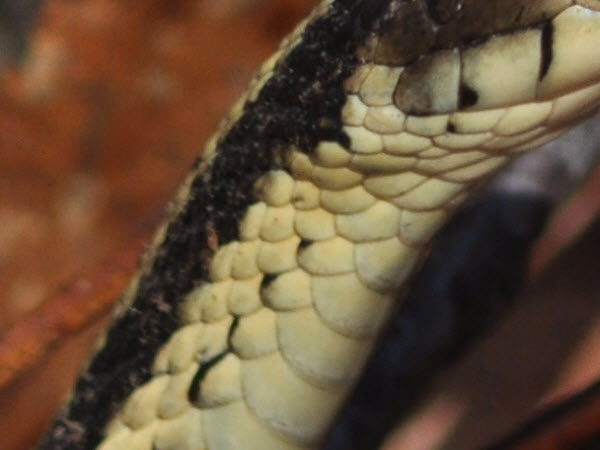
The Northern Water Snake is prevalent in the northeast - found near water. In trying to become confident of my identification, I learned that, in addition to the characteristic coloration, the scales of the northern water snake are keeled - on most scales there is a ridge running the length of the scale, giving the snake a rougher look and feel than a smooth-scaled snake. Naturally I zoomed in on my image to find the keeled scale - and show two examples here. In comparison, I zoomed in on an image of a garter snake to see a smooth scale - images also shown here.
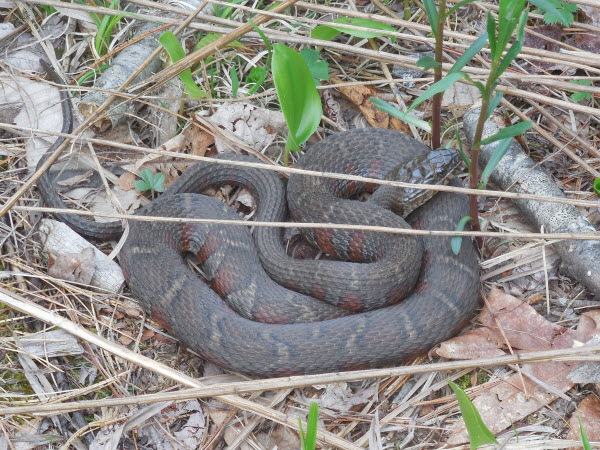
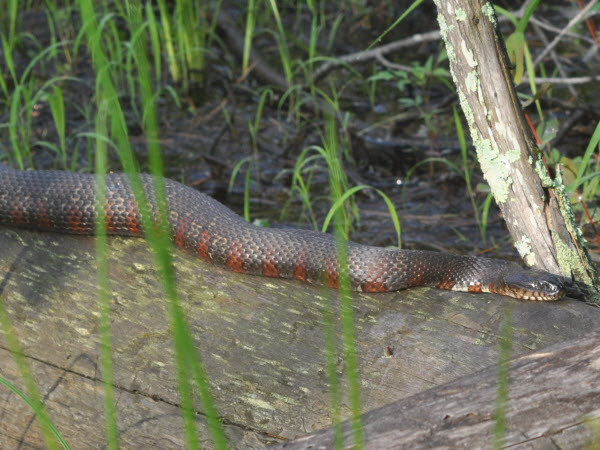
The coloration of this snake is very distinct - a gray base with cross-bands near the extremities and blotches of red and brown in the middle. I had trouble finding a similar image online - finally realizing that the mature snake largely looses these colored patches, and appears as a mostly all gray snake. I tend to photograph any snake that I come across as I hike, and sure enough, I had some images of older northern water snakes, without the color patches so clear on snake just below.
some references that I like: www.massaudubon.org, www.maine.gov/ifw/wildlife, masnakes.org, and snake-facts.weebly.com
I was interested to learn from the references that the northern water snake is one of the few snakes that do not lay eggs. Rather they carry the eggs inside their body and give birth to live baby snakes, each 6 - 12 inches long. A typical snake will give birth to 20 snakes at a time, the average is 8, and the extreme is about 100!
I also learned that, while non-poisonous, this snake will defend itself if cornered or captured, and will bit repeatedly - non-poisonous but painful, and a mild anti-coagulant will leave a wound that bleeds.
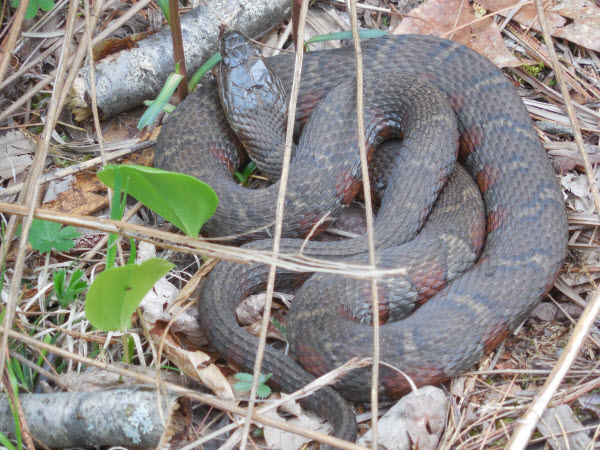
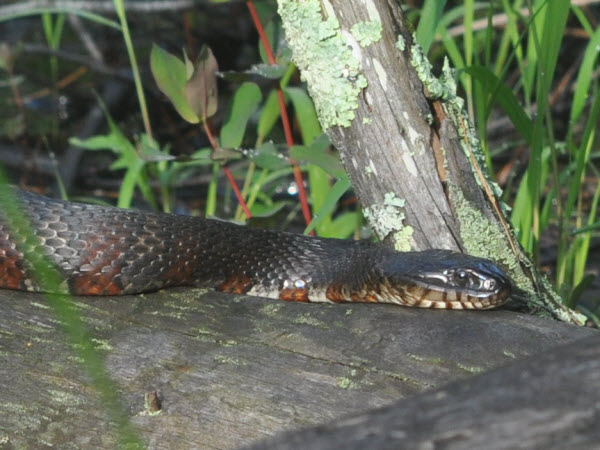
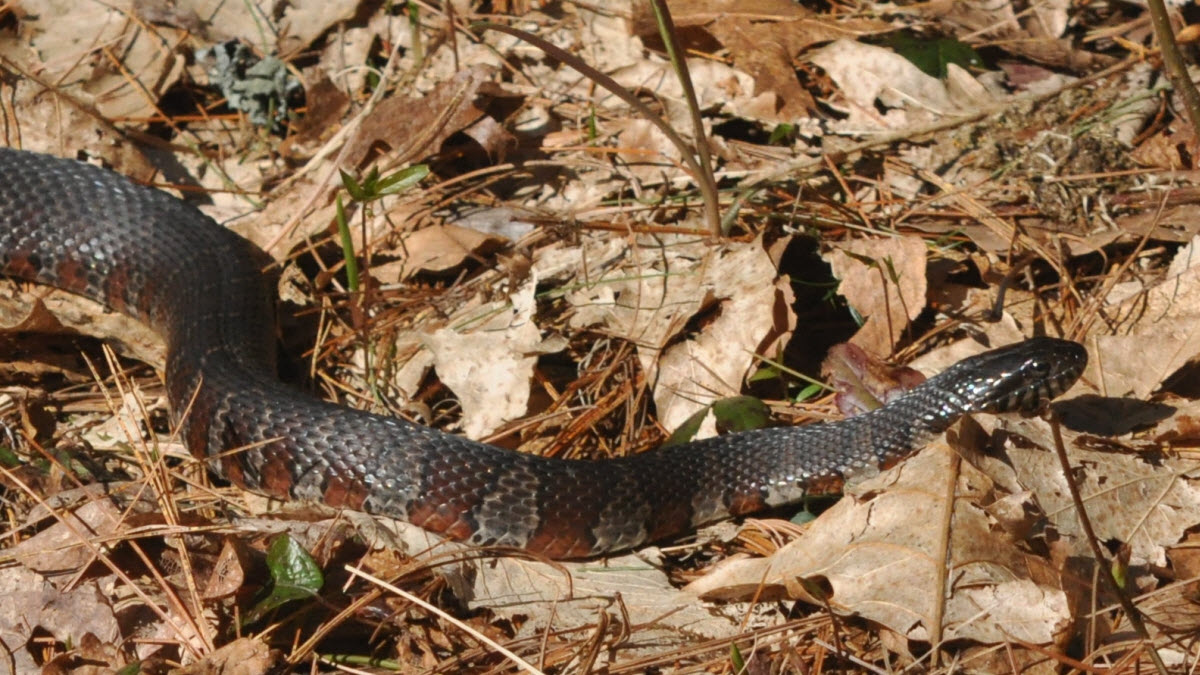
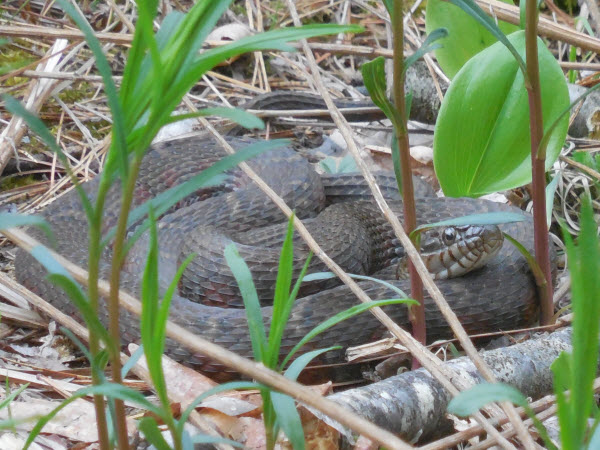
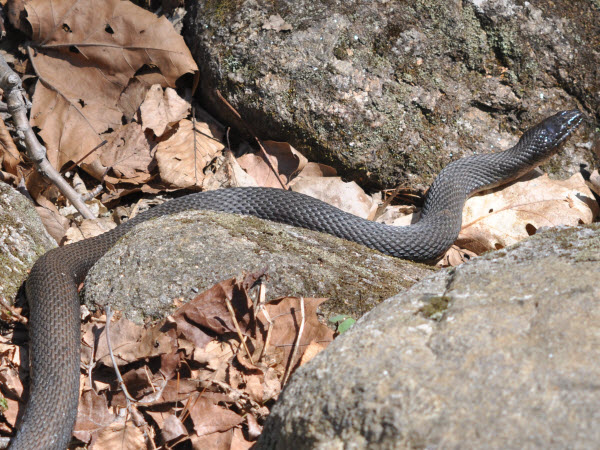
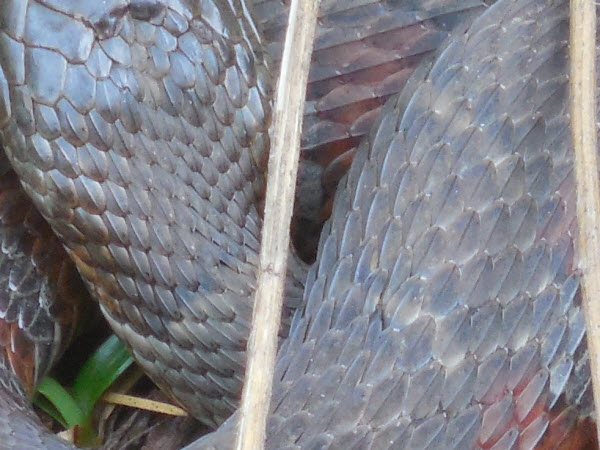
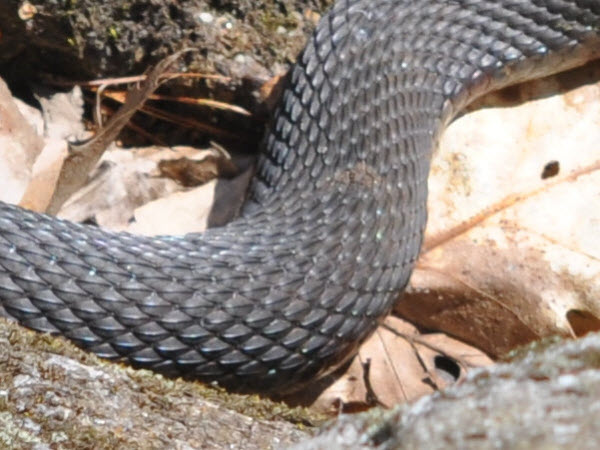
Two Northern Water Snakes are shown above left, zoomed in on right to show the keeled scales. The upper right is especially clear - a ridge formed on each scale, running the length of the scale in the direction of the snake's body. I think the lower right image becomes equally clear on inspection, especially in the lower left portion of the image.
In contrast, the common garter snake is shown below, with smooth scales visible on the lower right image.
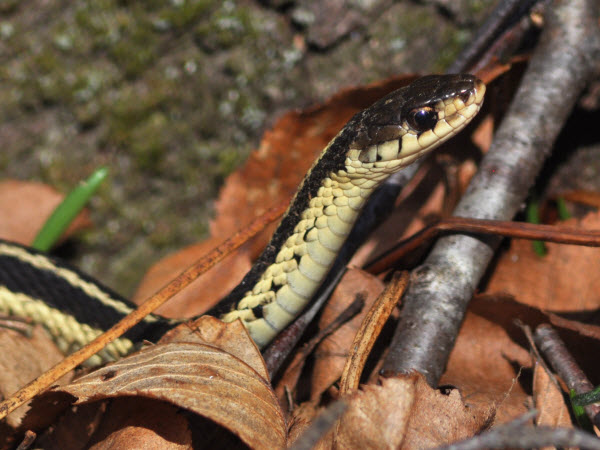
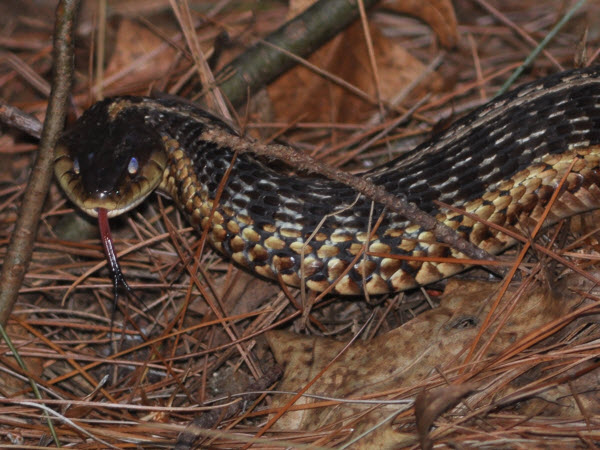
I nearly stepped on this snake while walking in the woods late afternnon - we were both surprised! The snake moved to the side, and I took the opportunity to take some photos. I have always heard the expression of the forked tongue - I am not sure I like looking closely at this picture - but a good view of that tongue!
Lizards