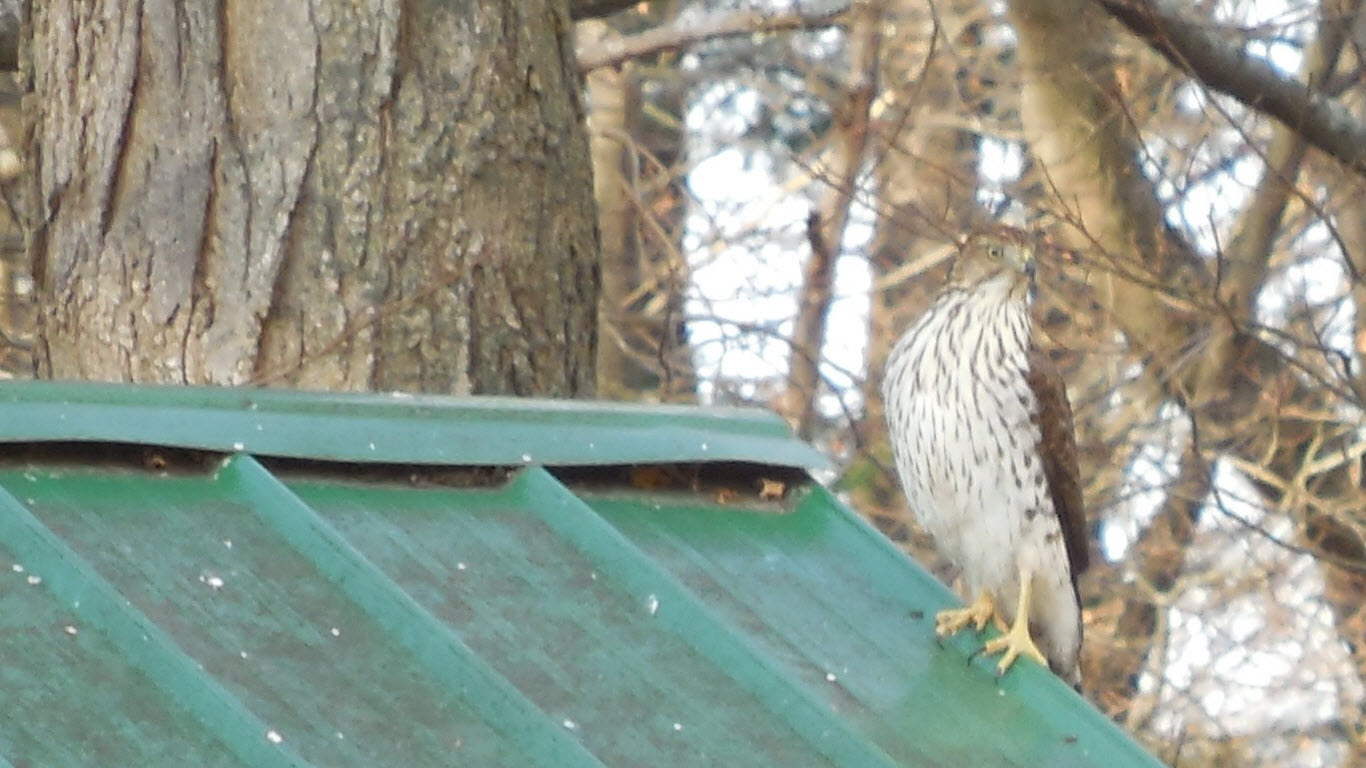
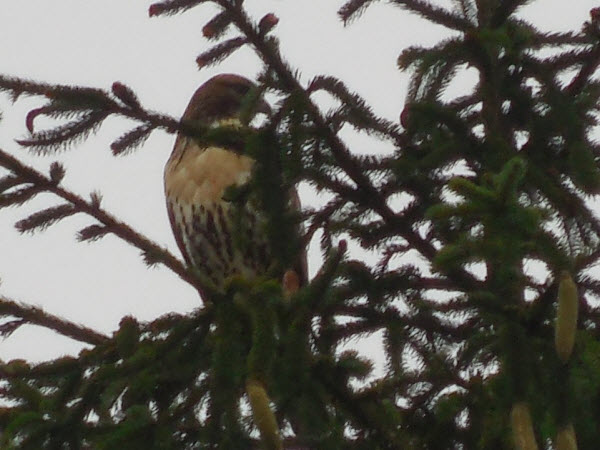
This Coopers Hawk is sitting on top of our chicken coop, and did not wait for me to take a better second shot. In fact, this is probably the hawk that got one of our chickens a few weeks earlier. He made it off the ground with the chicken - I watched - but he lost the chicken shortly after. All the chickens made it back to the coop that evening. The chickens are instinctively very aware of the presence of the hawk, and will simply disappear when the hawk is around - scooting under any nearby bush or other protection and becoming silent. It is very interesting to watch.
This hawk has been present near our house for a week or more, singing almost non-stop. Being mid-March, I have been watching for a second hawk or perhaps a nest.
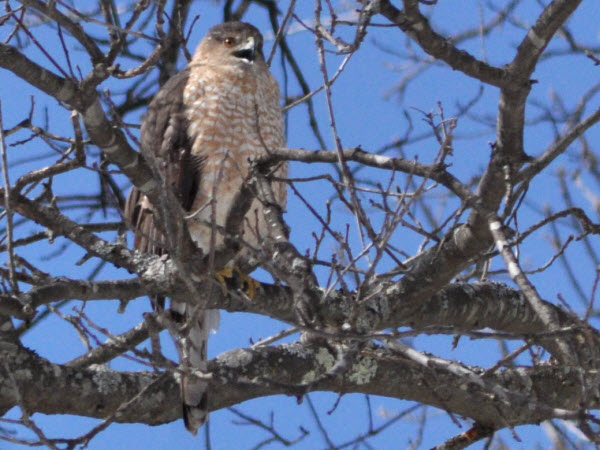
On three occasions we have had a chicken nabbed by a hawk. Each time the hawk dropped the chicken while attempting to fly off - sometimes from 10 or 15 feet in the air. The chickens have been fine. Does give a better appreciation for those talons, though!
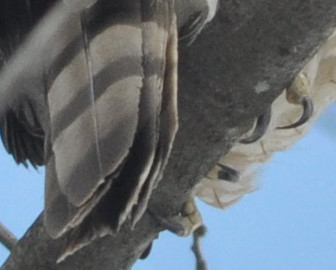
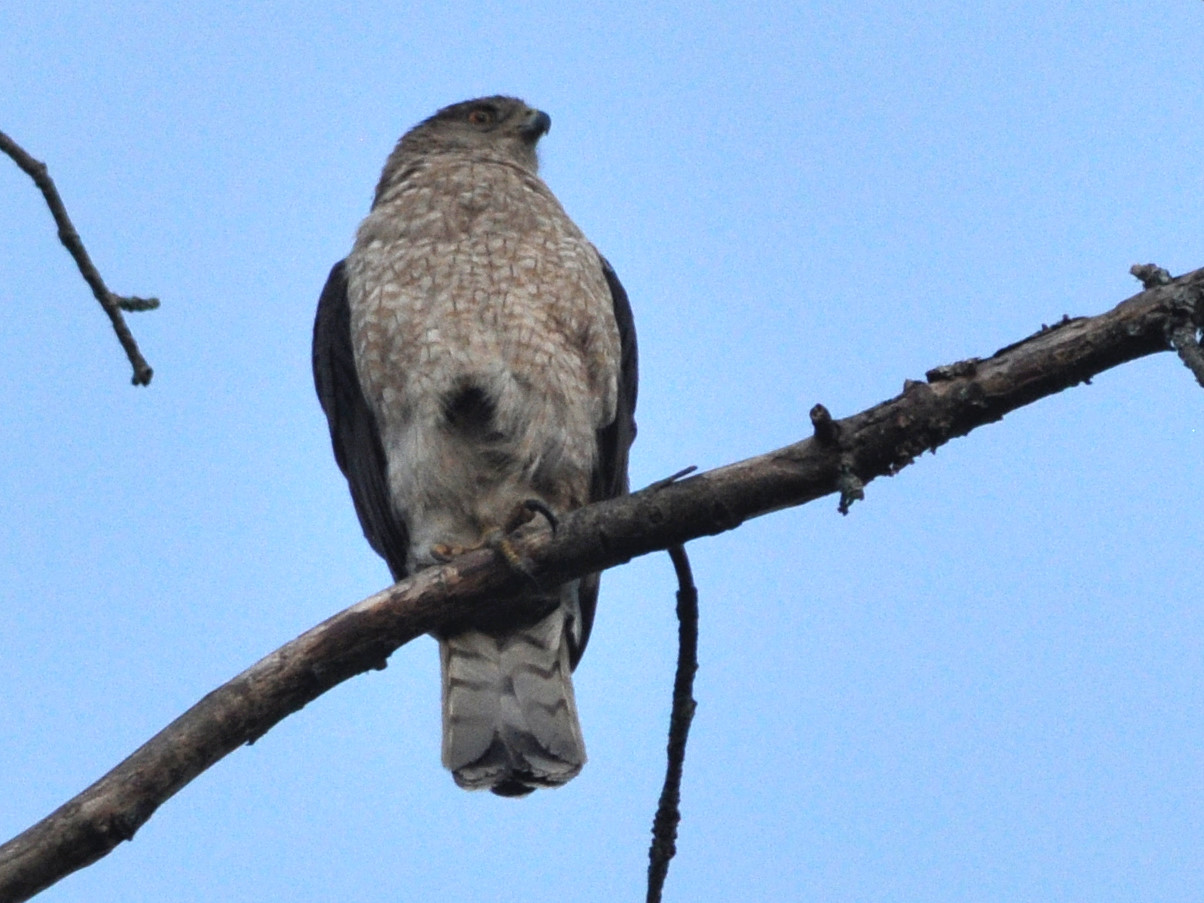
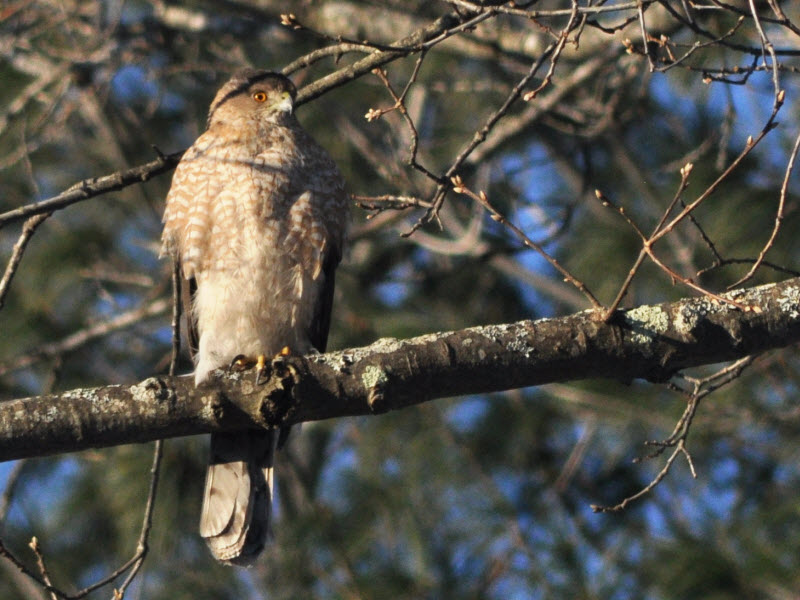
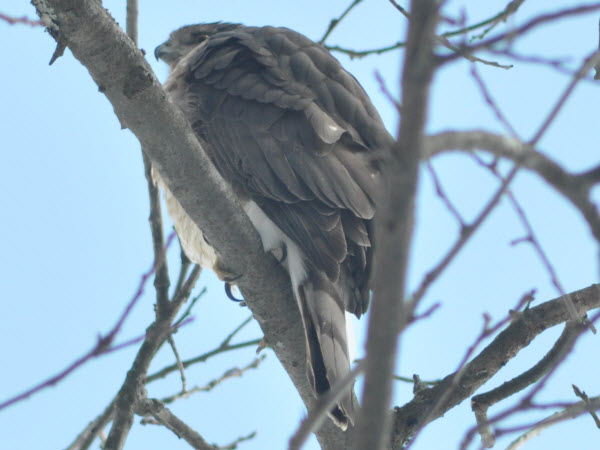
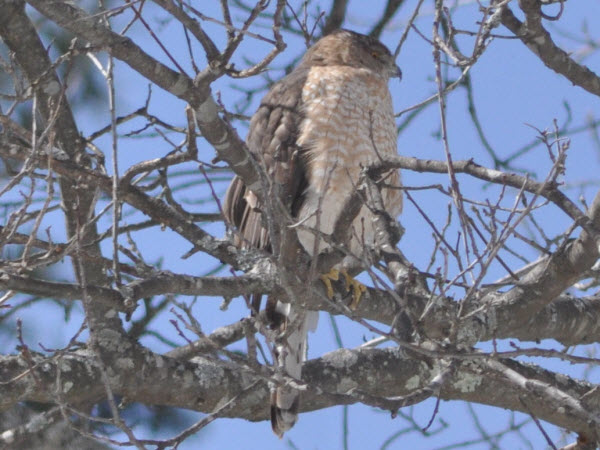
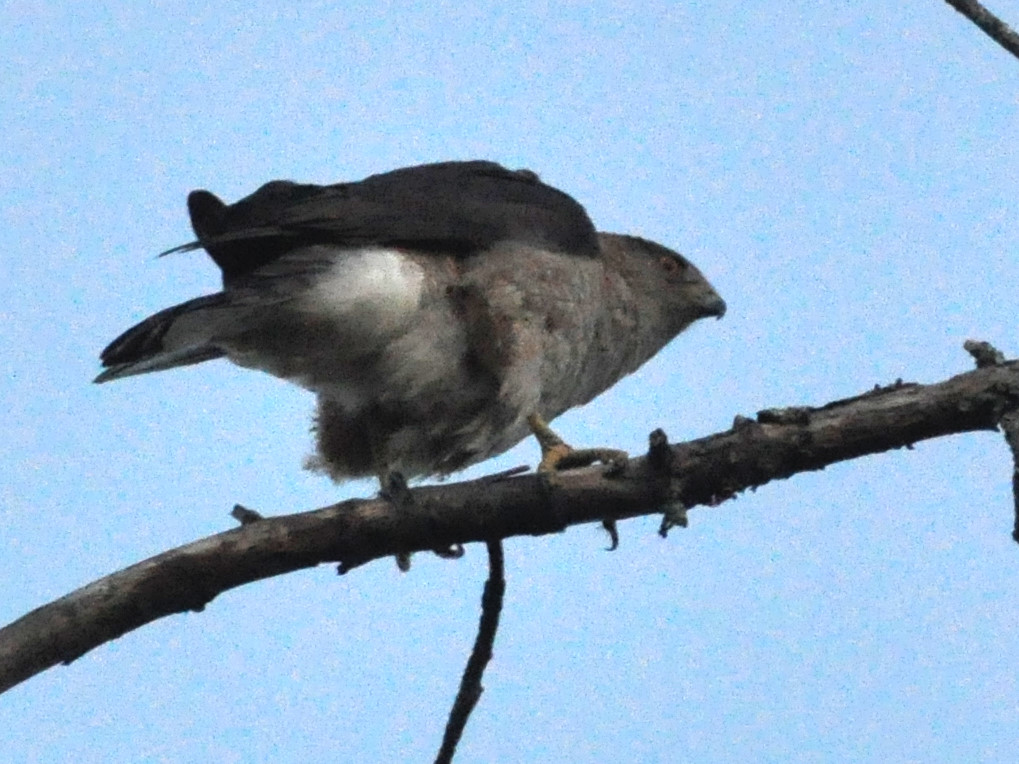
The hawk is a bird of prey - so regal in the image at left - so menacing in the image below, at least for a whatever prey may be in its' sights.
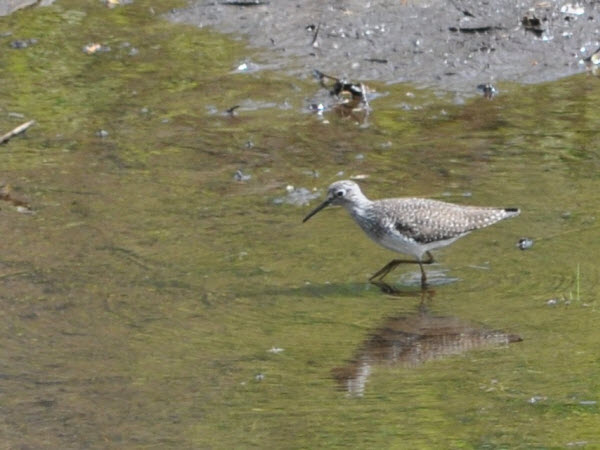
A Solitary Sandpiper, in the riverbed of the Assabet river, Concord. Yes, this bird is all alone, but the "Solitary" is, in fact, the type of Sandpiper. This bird summers in the north - Canada, and migrates through the US. This photo was taken May 9, 2015, and so consistent with that distribution.
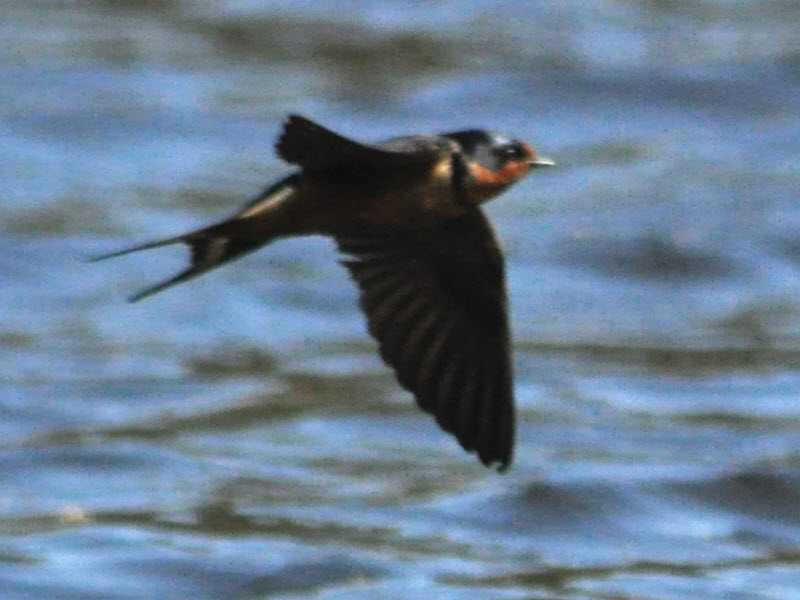
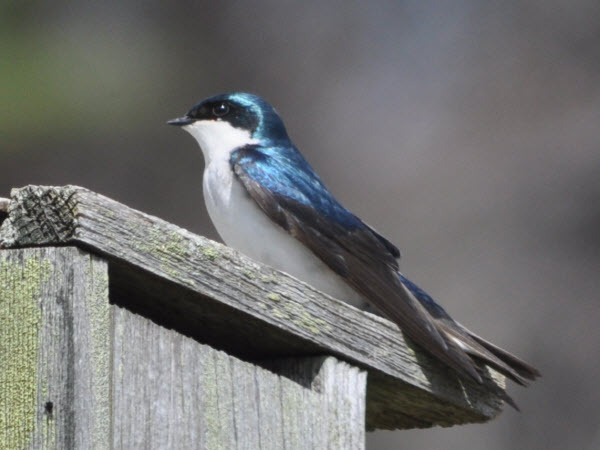
Swallows fly so fast - getting a photo is a challenge! I found a place with lots of swallow activity, and essentially held the camera button down and pointed to where the most activity was. Many hundreds of pictures in a short time, almost all discarded, and a few that I liked!
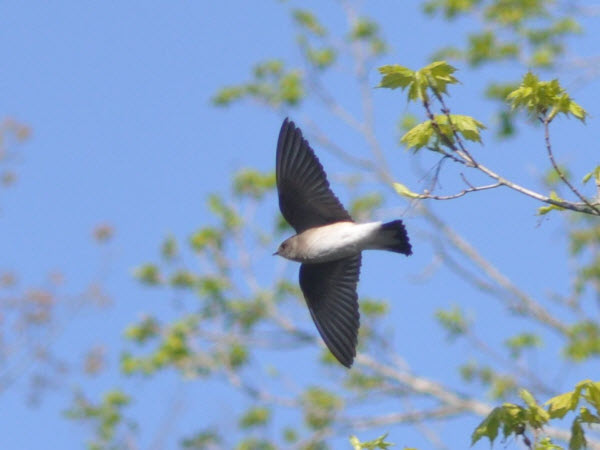
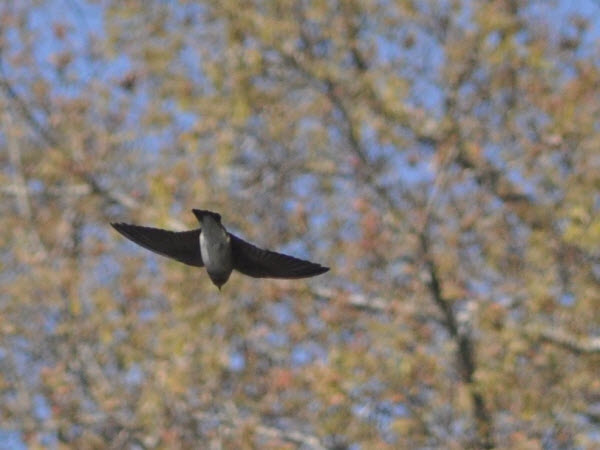
I am pretty sure the swallows above are cave swallows. That makes sense, given that the pictures were taken near the mouth of a cave! I also note the coloring and the square tail.
The barn swallow at right, on the other hand, as a forked tail and much stronger coloring.
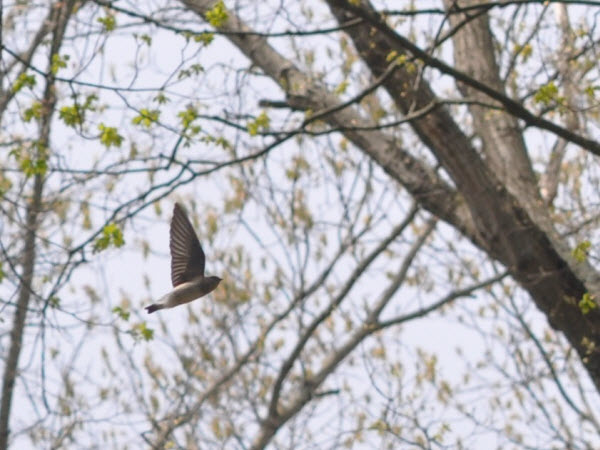
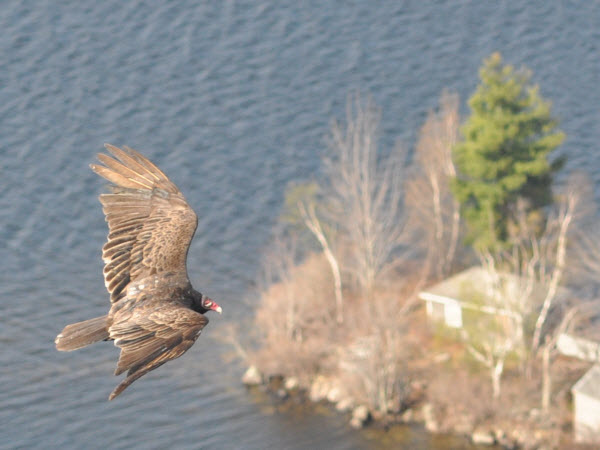
Most days that I am in Maine I climb one of the ridges of Megunticook Mountain with my dogs. On this day I was above the level of this Turkey Vulture, which was riding the thermals over the water where the wind is hitting the bluff.
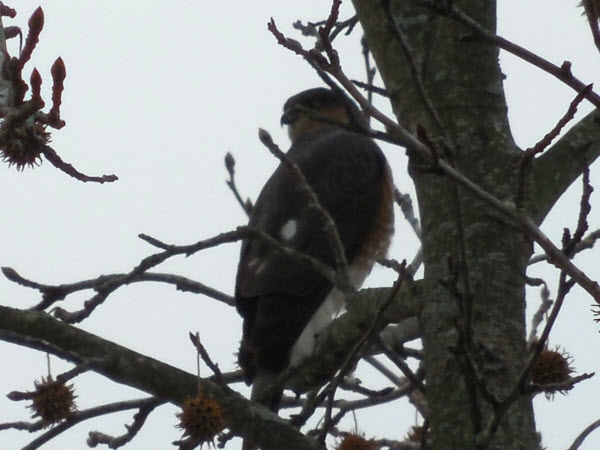
Bluebird, taken at Turkey Run state park, Indiana
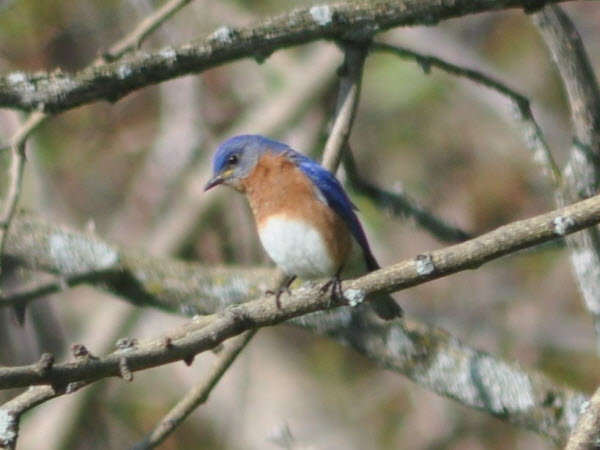
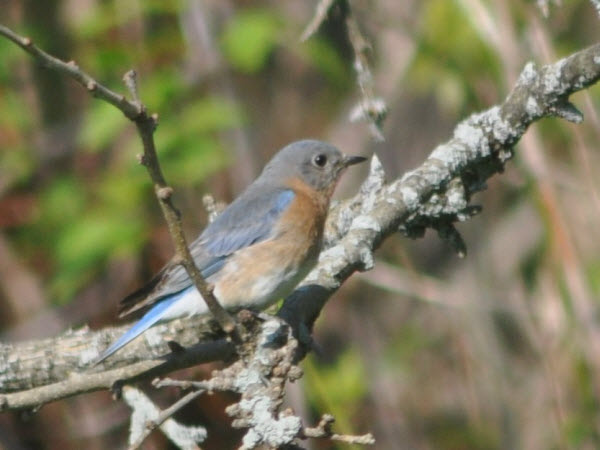
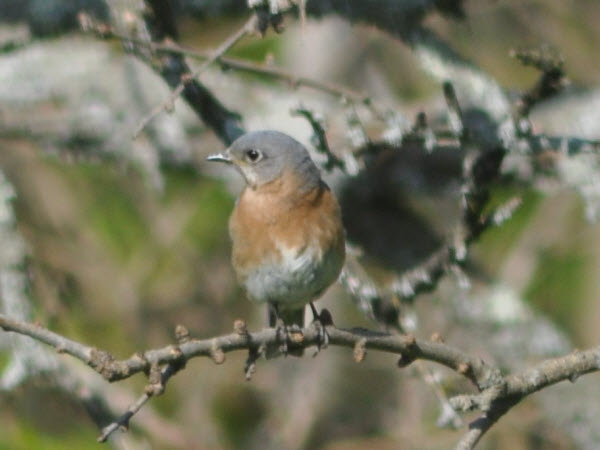
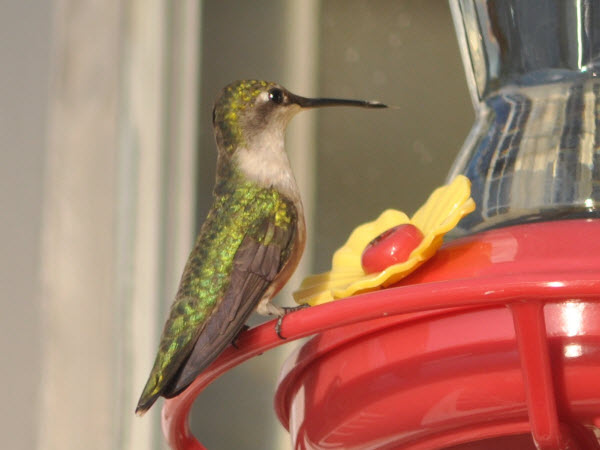
Sort of cheating taking a picture of a hummingbird on a feeder! But still cool to have a hummingbird.
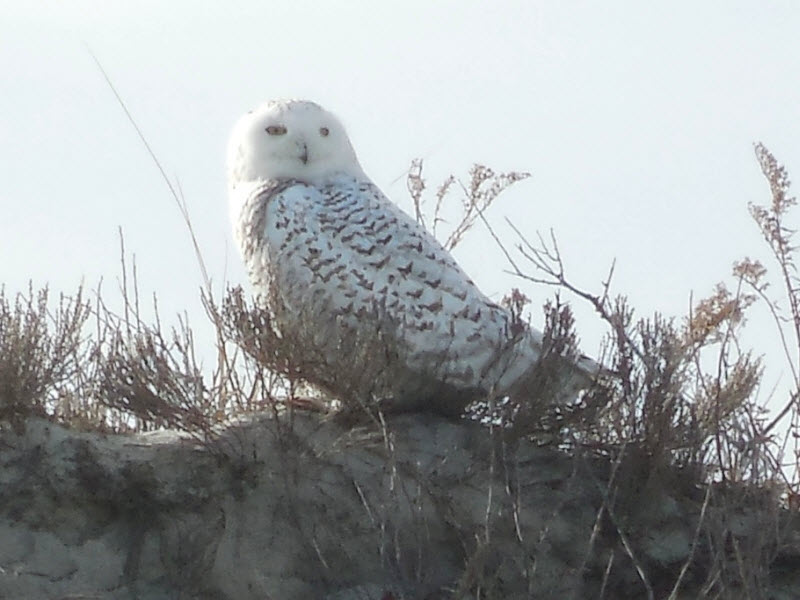
Snowy Owl
Taken in the winter, on a beach on the north shore of Boston. The Snowy Owl was fairly high on a sand dune - a large bird to be so visible!
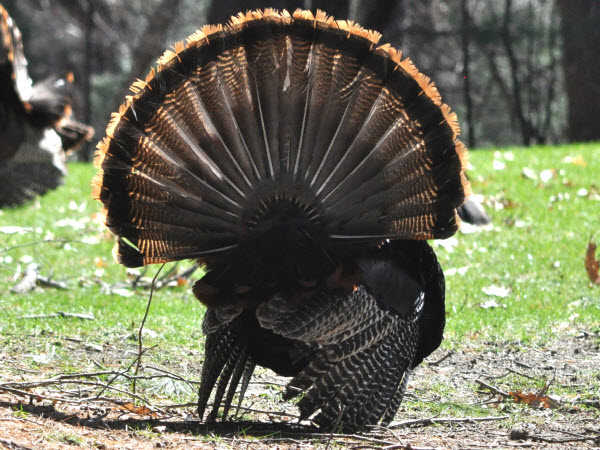
Early April is clearly mating season, and we spotted a field with perhaps a dozen turkeys, of which three were clearly male, showing off in force!
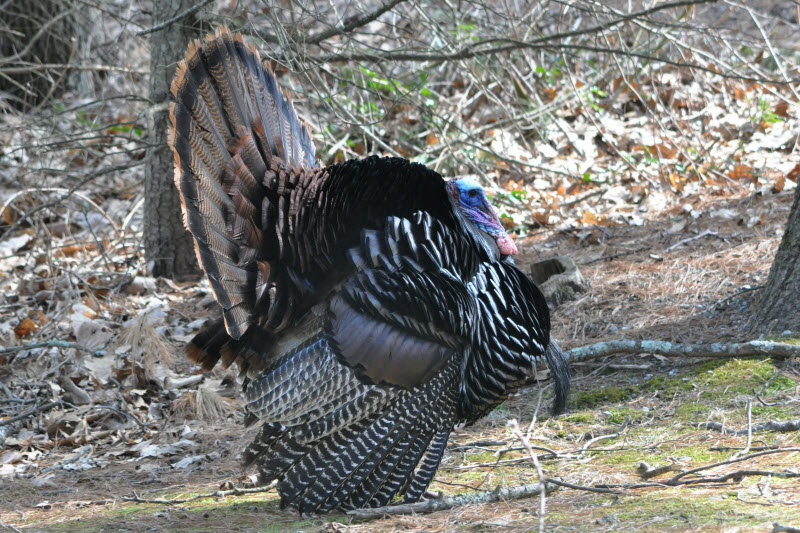
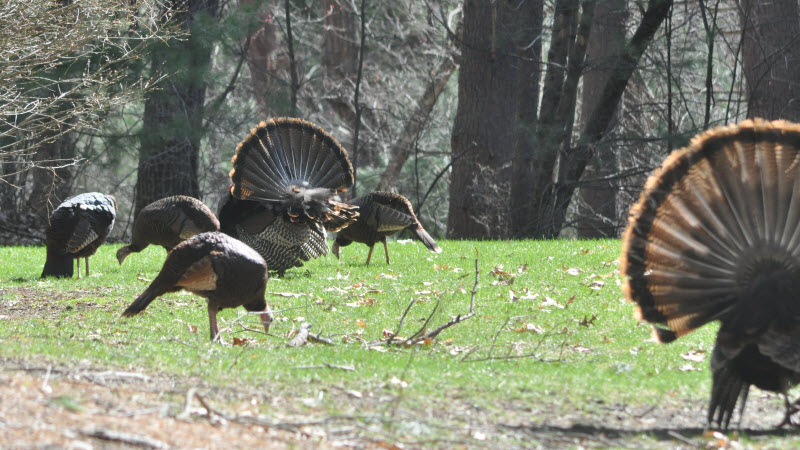
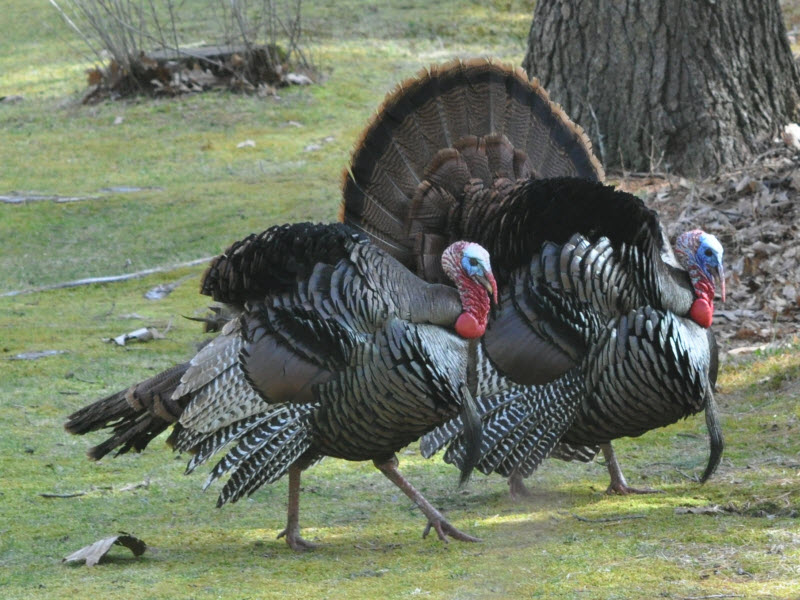
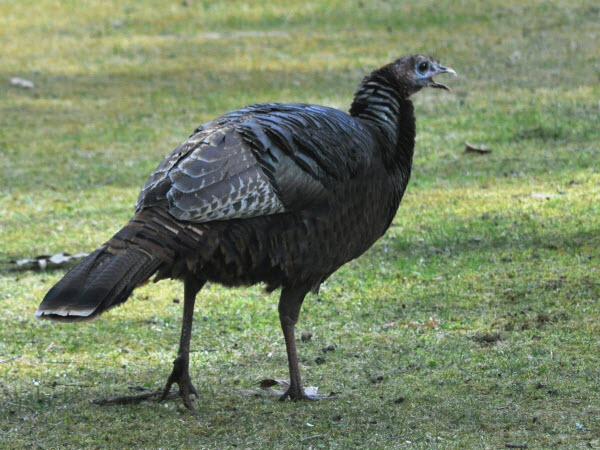
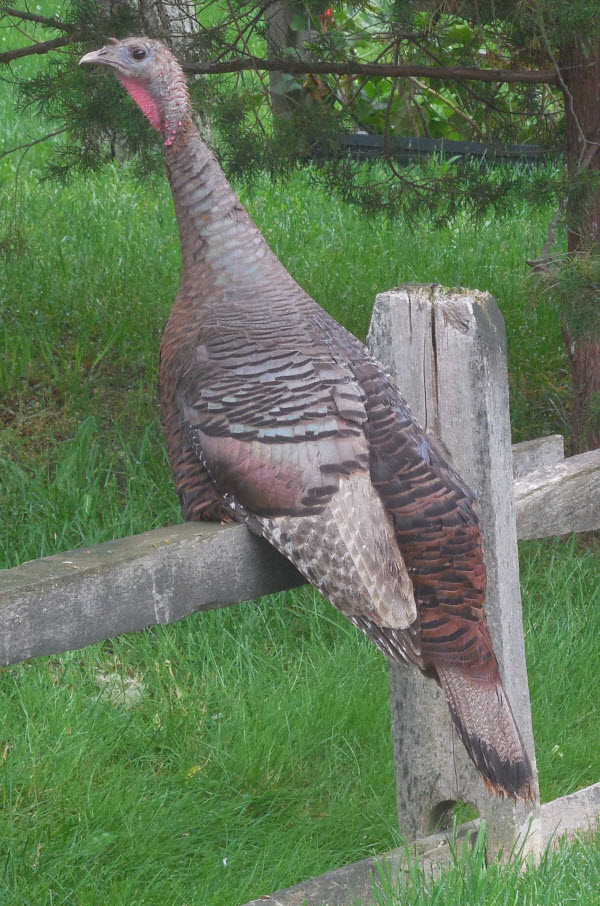
I saw this wild turkey perched on a fence post - I had just walked past, and so was quite close - thought I should take a picture. The turkey stood up and I took another, not noticing, until later, the baby that had been tucked under a wing!
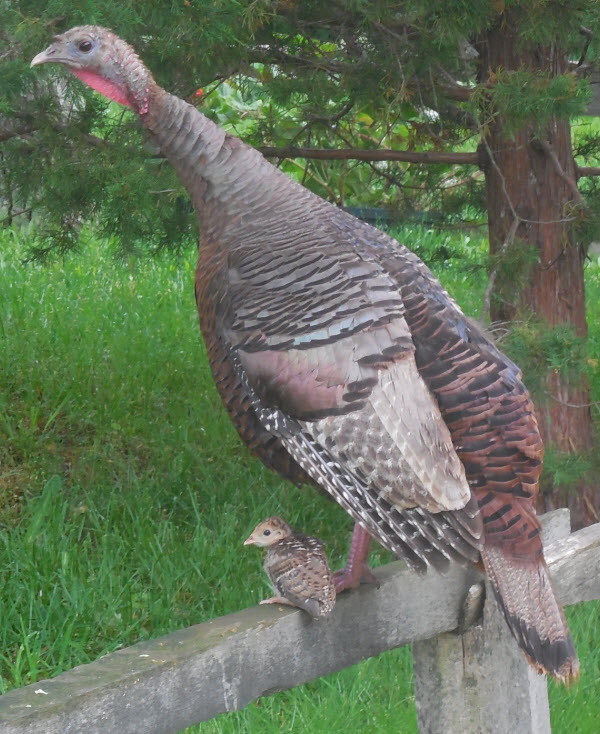
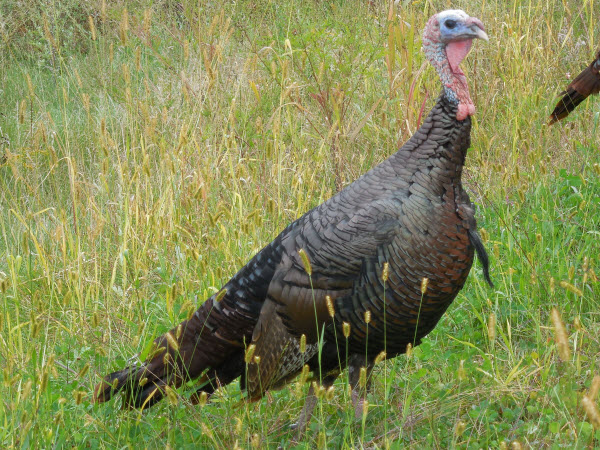
Wild turkeys can be pretty brazen - one family can be found blocking rush hour traffic in our town. This group was at the dump - clearly not concerned about people!
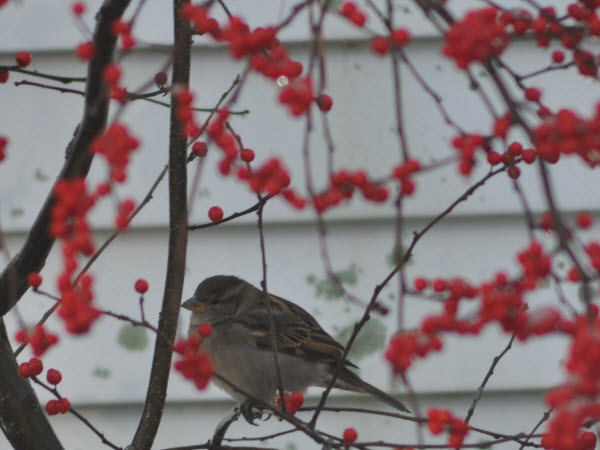
A winter berry bush in our back yard looks so cheery with fresh snow and a finch.
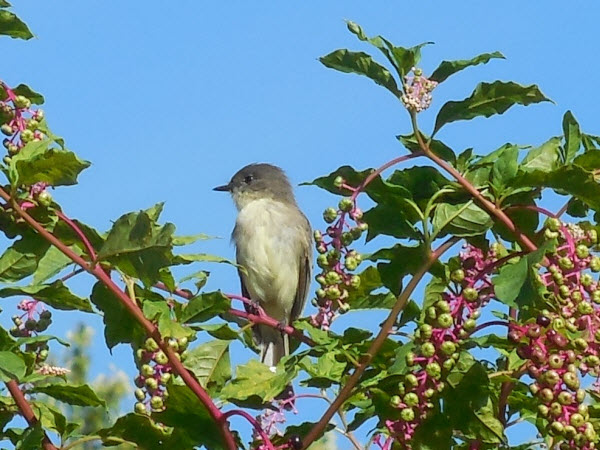
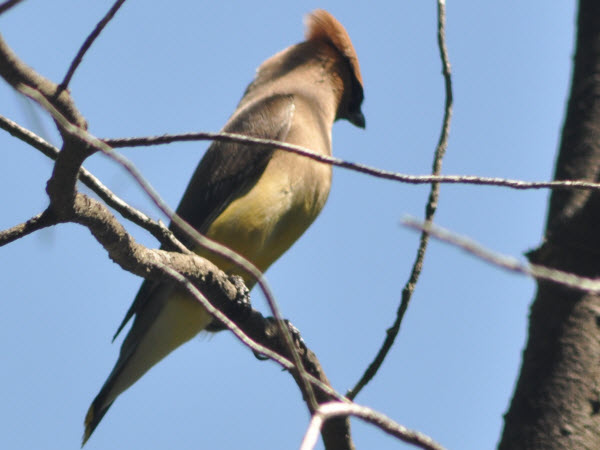
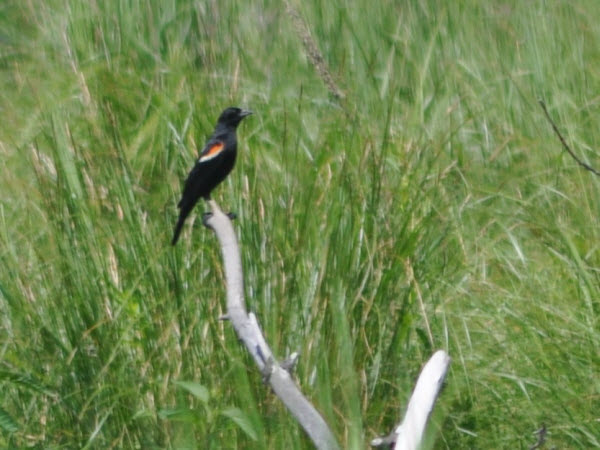
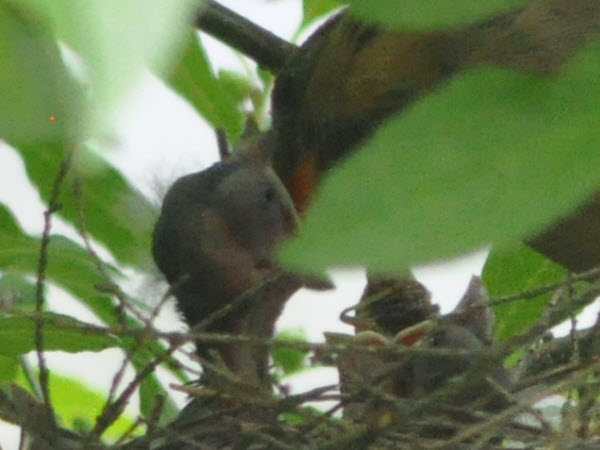
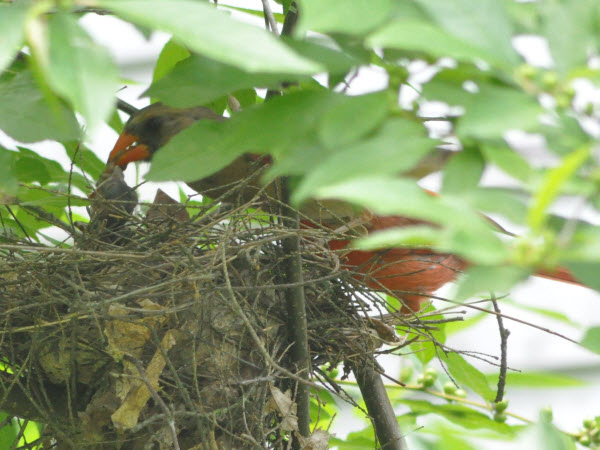
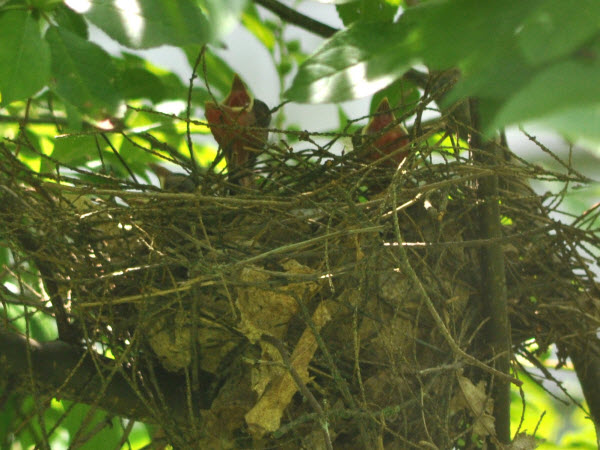
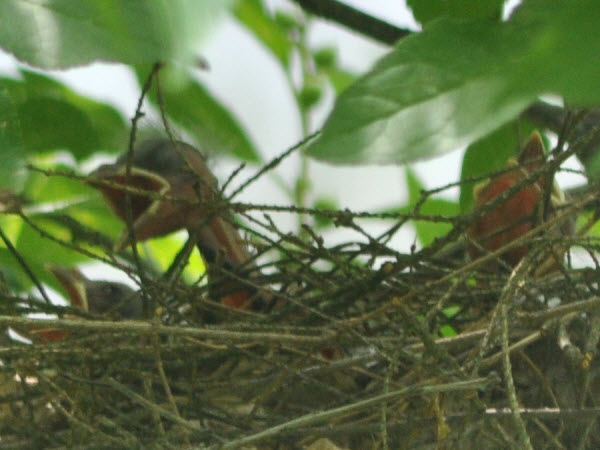
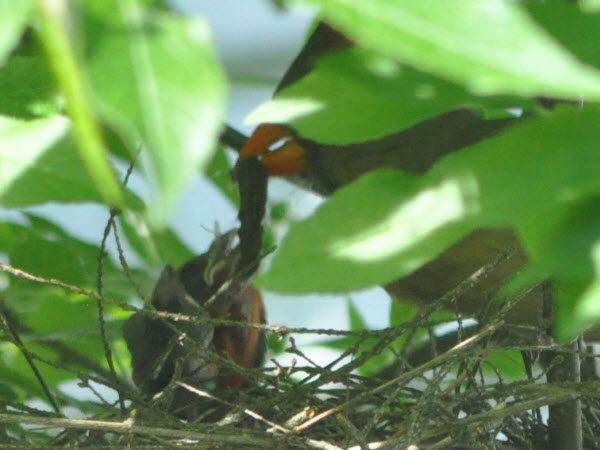
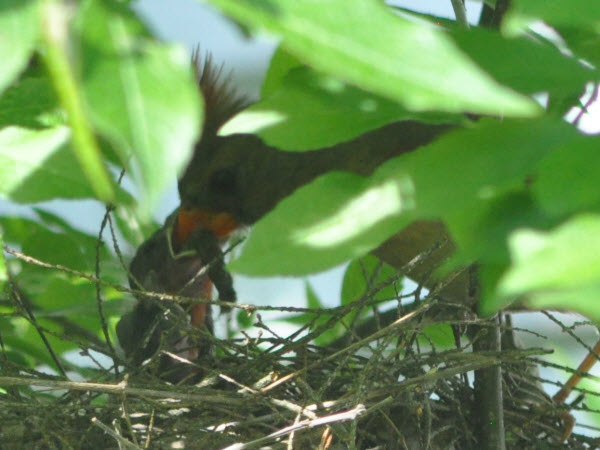
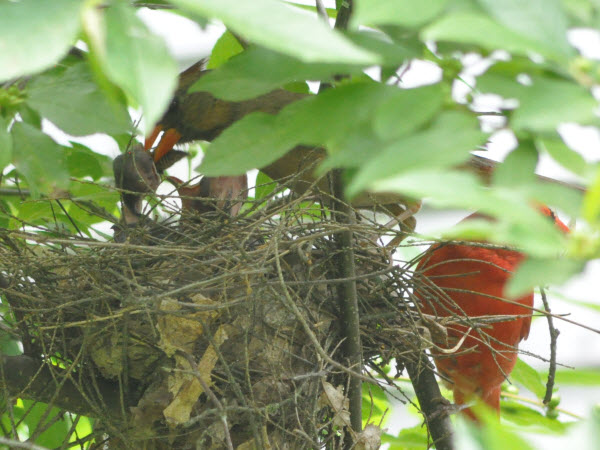
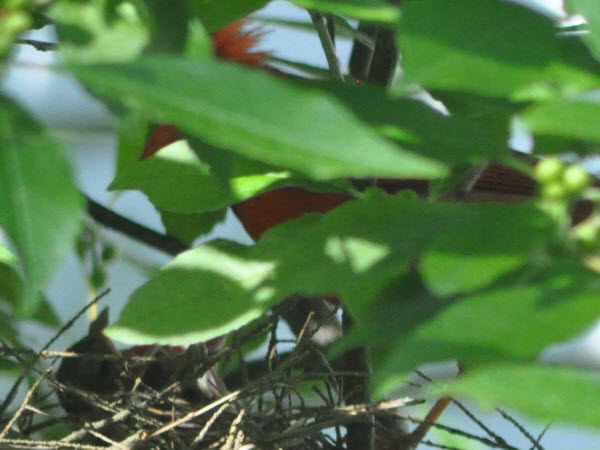
This Cardinal nest was conveniently in our backyard, though line of sight was not so easy! These babies seem to be all head and no neck - but they were gone a few days later. And they were already eating whole worms. I noticed that both parents were present, and both were fetching and feeding food.
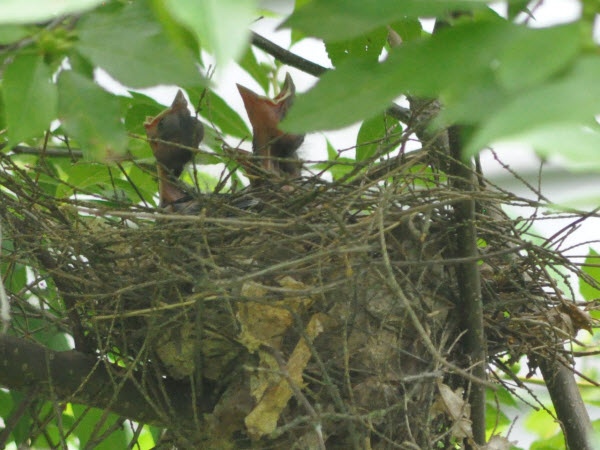
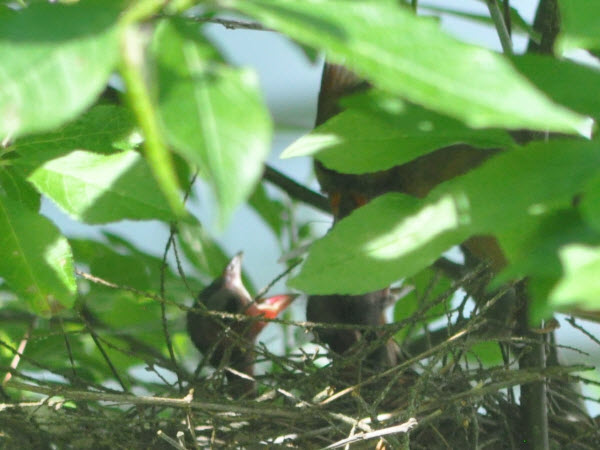
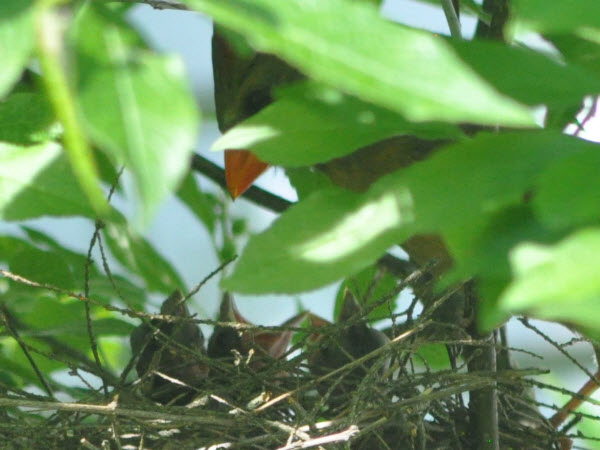
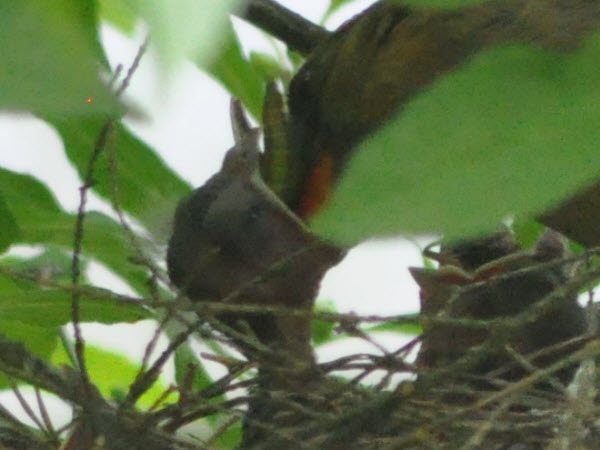
There is no problem distinguishing the male and female parents, with the bright red male showing through the leaves of the bush!
Ring-necked duck - I had never heard of diving ducks, and so was completely surprised to see a group of these ducks last spring (April) dive and swim underwater, much as a loon or other diving bird. Of course, I miss-identified the duck - after looking through Internet photos I decided these were bufflehead ducks - also diving ducks. But in fact, these are ring-necked duck. I returned the next day to get more pictures - and the sun was out the second day. A male and female are present in this picture.
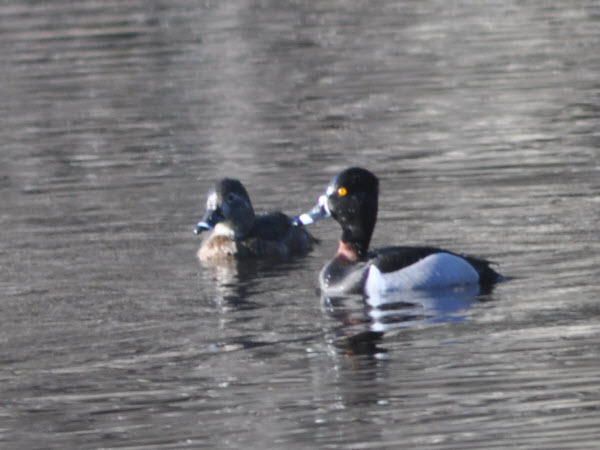
Just a duck - but I like the colors
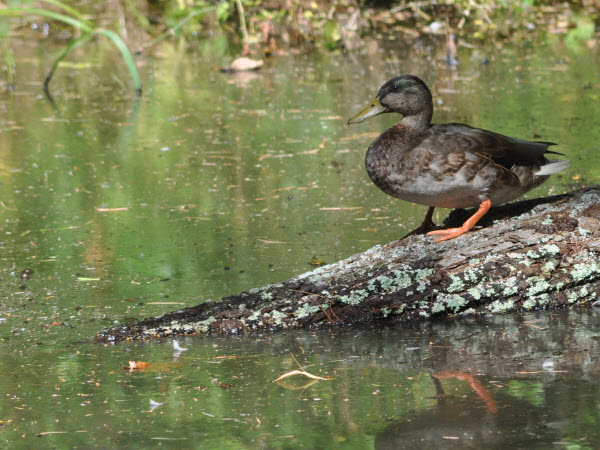
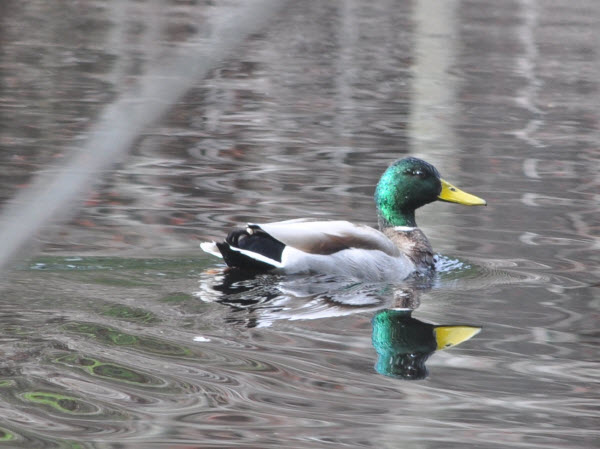
Mallard duck - a male, with that green head, in early spring - April 1
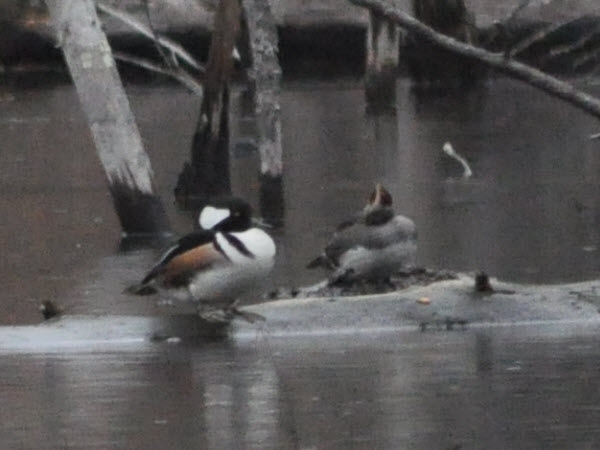
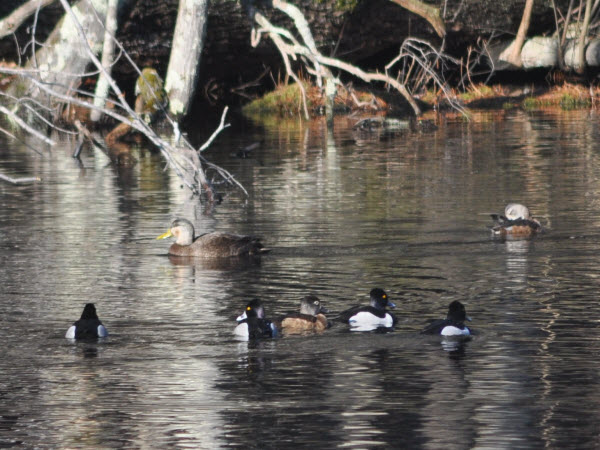
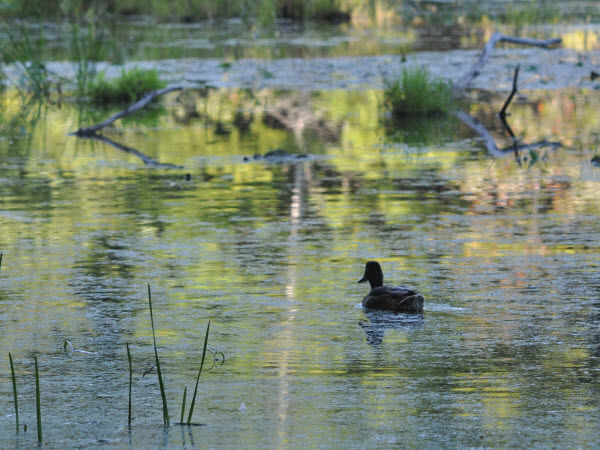
Hooded Merganser - a diving duck, and the only duck specialized in eating fish. This is a diving duck, able to swim underwater, and with eyes adapted for underwater vision (Audubon, hooded merganser. This photo was taken late winter (March 3).
Ravens and Crows
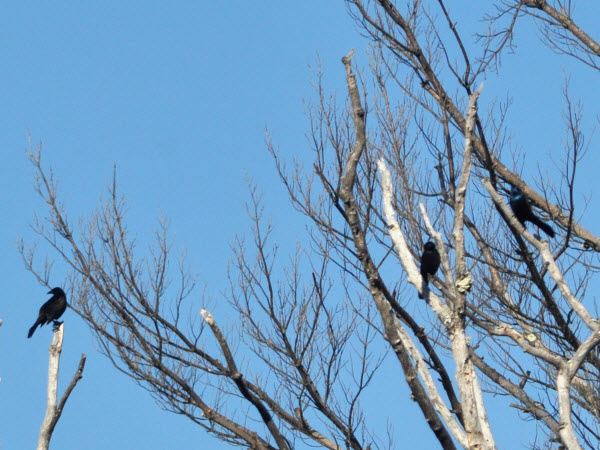
Ravens and Crows - I know there are Ravens in the northeast, but I am sure I am almost always seeing crows, and I certainly have not known the differences between the birds. I saw my first Raven, to know it as a Raven, on a guided walk near Santa Cruz. In fact, the walk was to see elephant seals, but the docent pointed out the Raven along the way. I had already spotted the birds - a pair - and was taken by the size of them - the photo on left, below. At right is a crow, in the field just down from my home in Massachusetts.
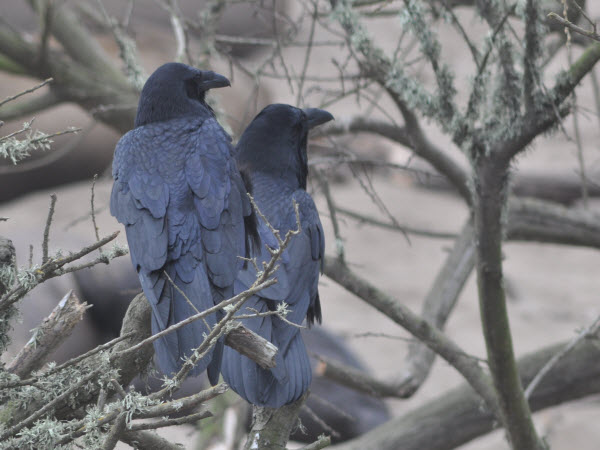
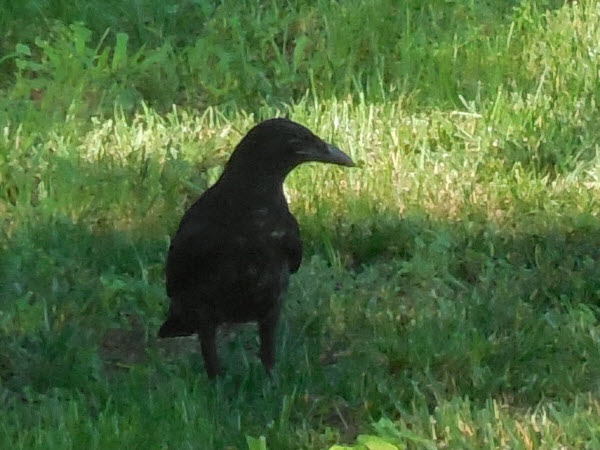
Clearly I am not the first to be unclear on the differences between the raven and crow - a page from audubon.com - how to tell a Raven from a Crow. And another I liked, Cornell Lab of Ornithology, Similar Species: Crow and Raven. A few attributes I noted in the Audubon article - Ravens are larger, and travel in pairs, while crows are usually in groups.
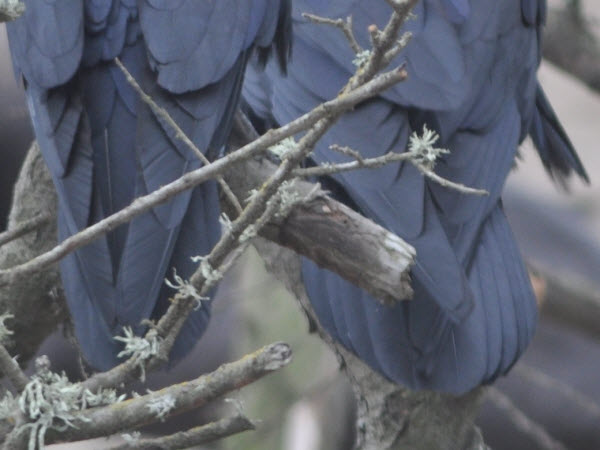
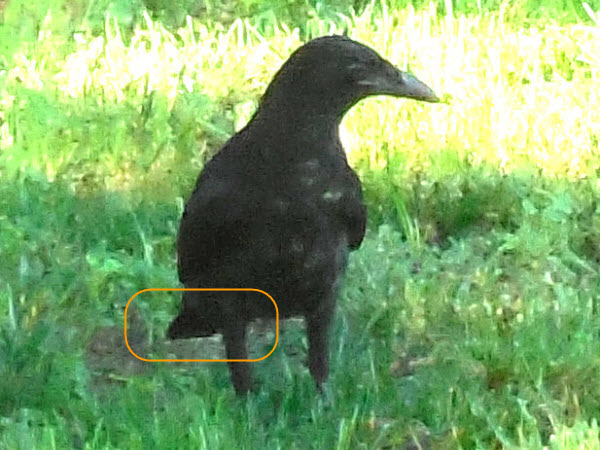
Also from the Audubon page - the crow's tail feathers are basically the same length, while the ravens have longer middle feathers in their tail. The crows tail opens like a fan, while the raven tail appears wedge-shaped when open.
I zoomed in on my image of the raven to see the longer middle feathers of the raven tail, and adjusted the lighting of the crow picture to be able to see that the tail is straight across - the feathers are about the same length.
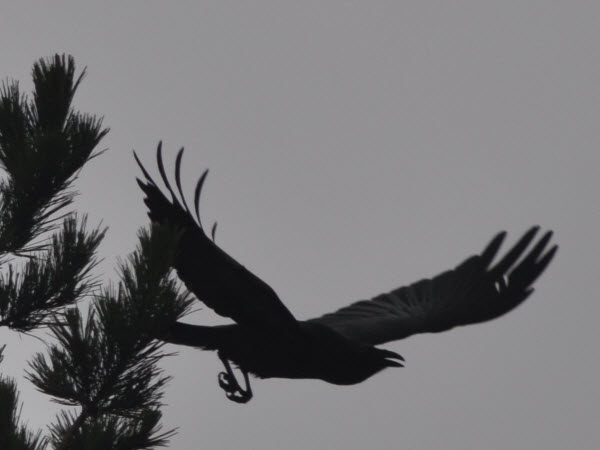
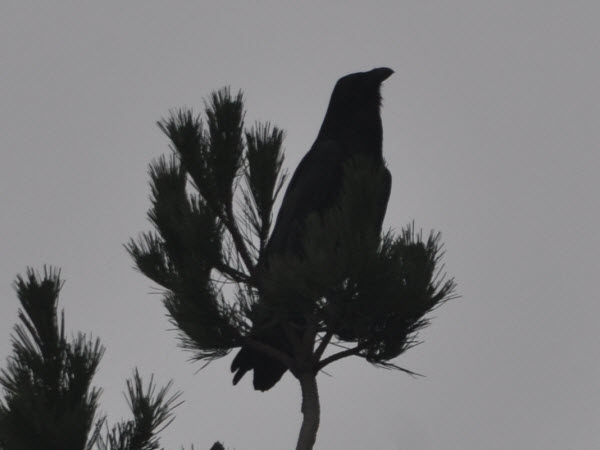
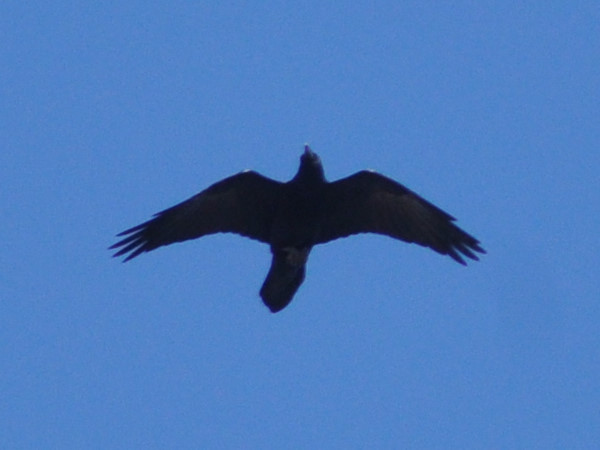
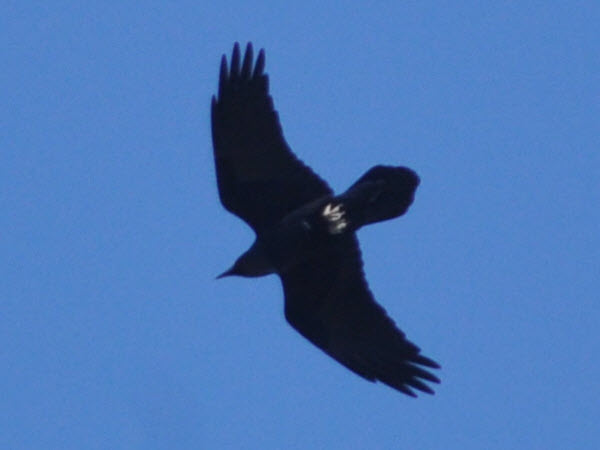
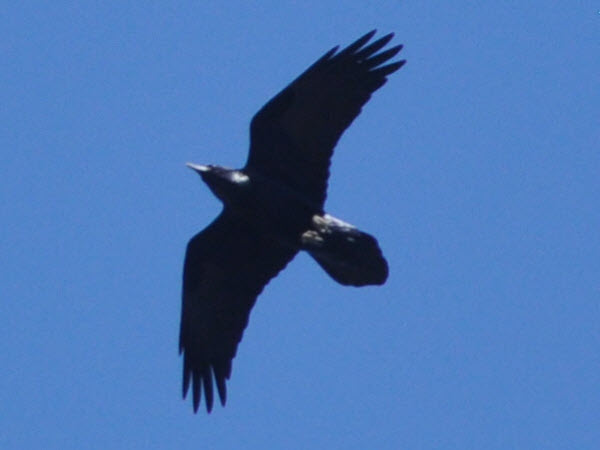
I took these photos high in Pinnacles National Park. There are a lot of vultures and a significant number of condors in that area, and I did not recognize this bird - all black, feathered head, no markings that I could see. I am pretty sure it is a Raven - the tail is wedge shaped, the head, no markings, and a smaller bird than the vultures.
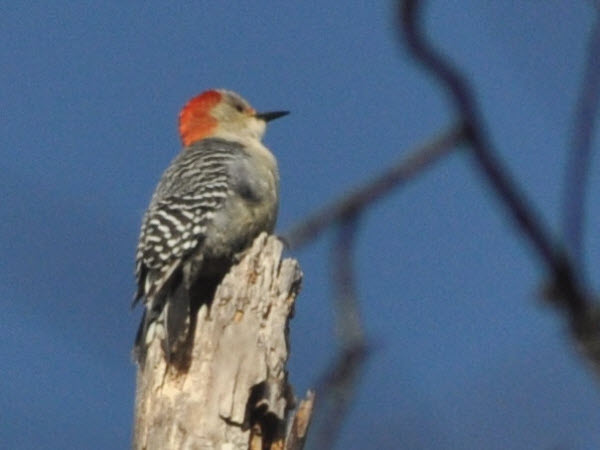
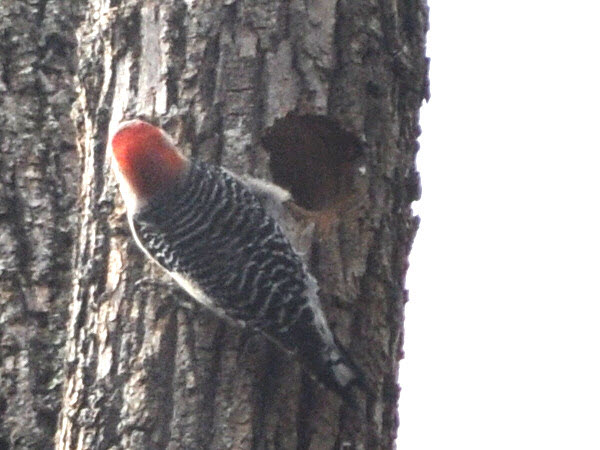
I hear the call of the red-bellied woodpecker often at home as I walk the dog in the morning, and in the woods - but it took me forever to finally locate the bird responsible for the call and make that association! This bird was on the top of a dead tree, calling away. I took the video, below, and then came to realize that the bird was watching over a nest, in the same tree.
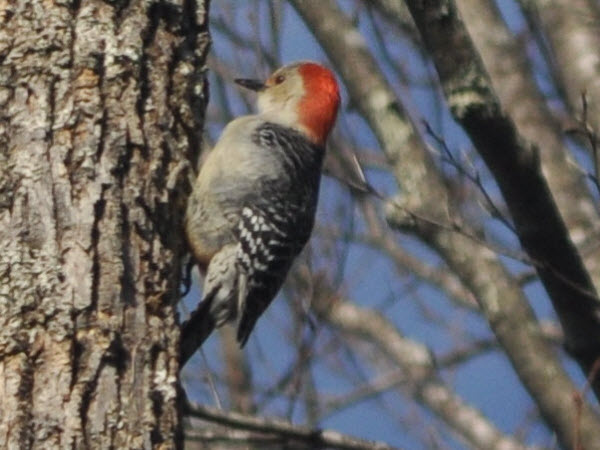
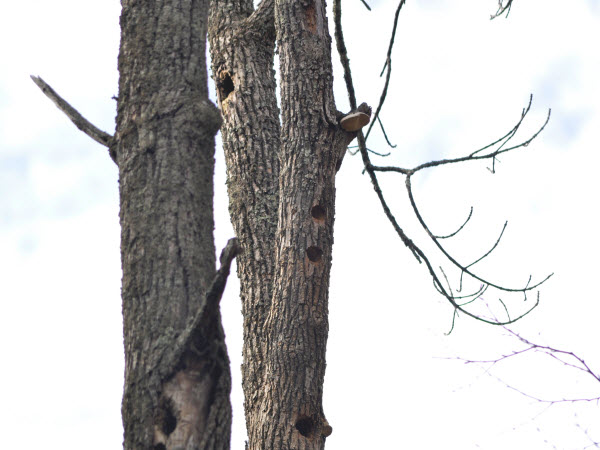
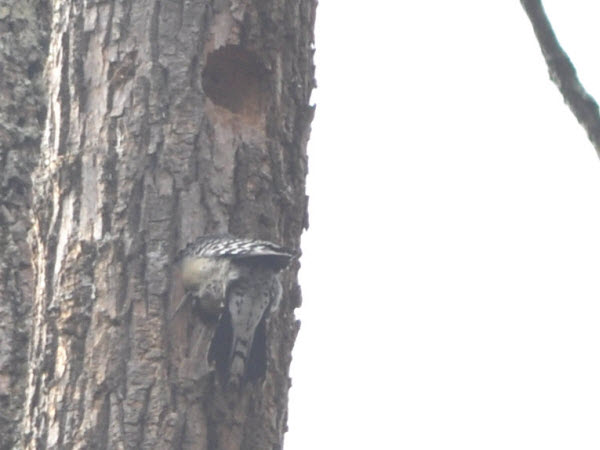
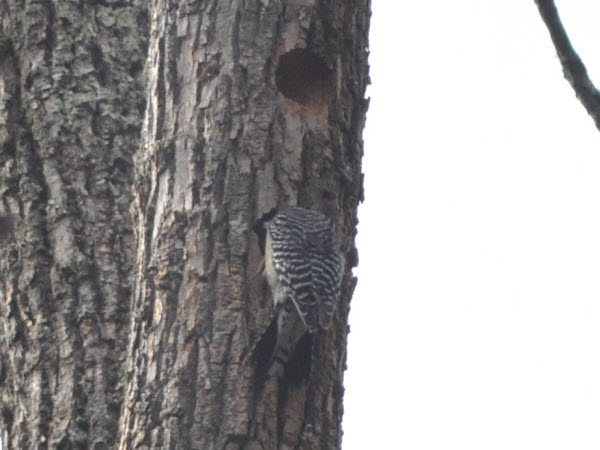
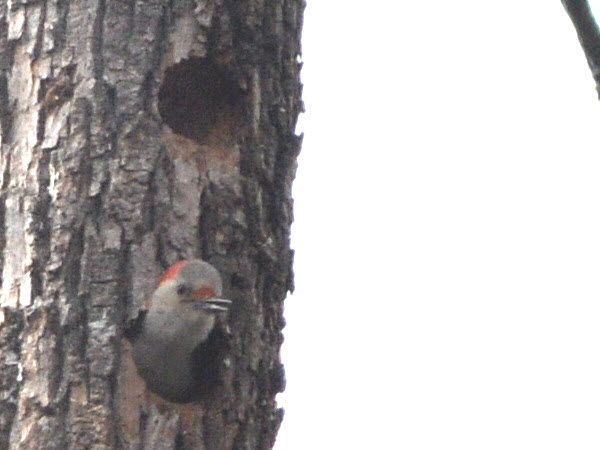
I noticed that one woodpecker would stay inside the tree and the other would either serve as sentry or fly off. On return, the woodpecker seemed always to go to the side of the hole and wait, listen, and perhaps knock a couple of time on the wood - it seemed as though it was checking to see if its mate might be home in the trunk or not.
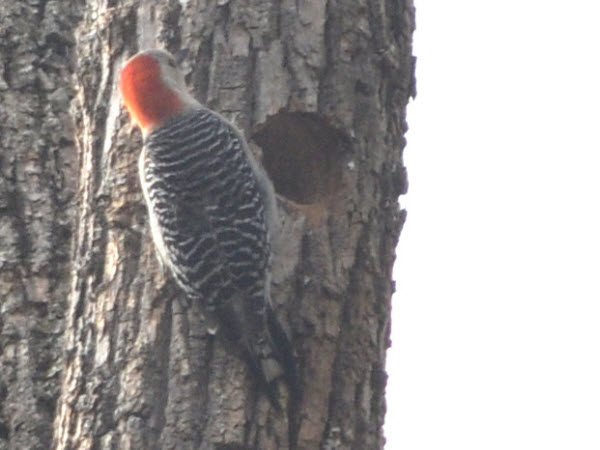
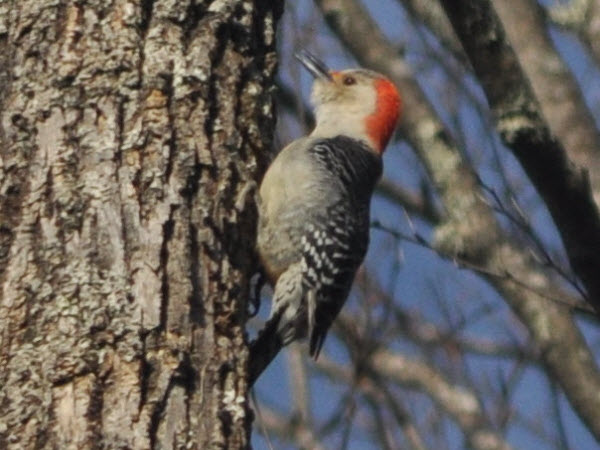
I noted that the woodpecker was not leaving the area - or even the tree, and so I stuck around. I noted two holes on the trunk, down from where the bird had been perched, and a bit later a second woodpecker arrive and promptly entered the hole!

Geese
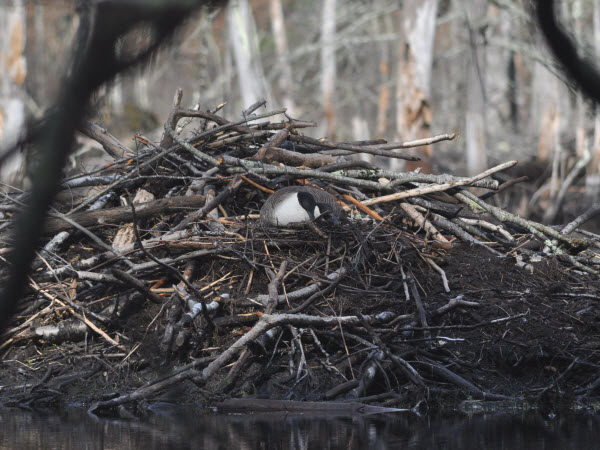
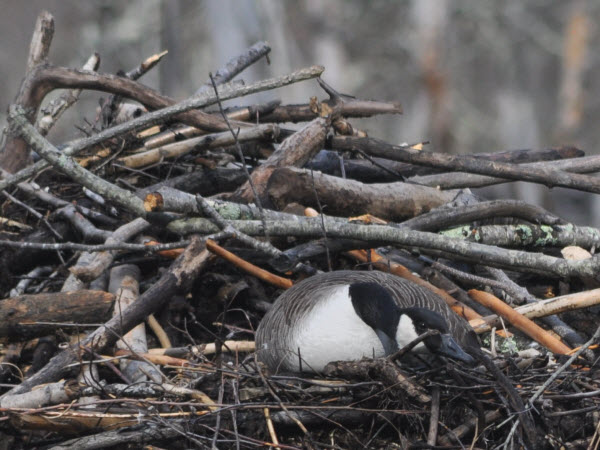
I saw something on a beaver lodge - too far in the center of a shallow pond to make out what was there, even with binoculars. So I took a photo - on zooming in, I found a goose, presumably sitting on a next of eggs, and doing its best to be invisible!
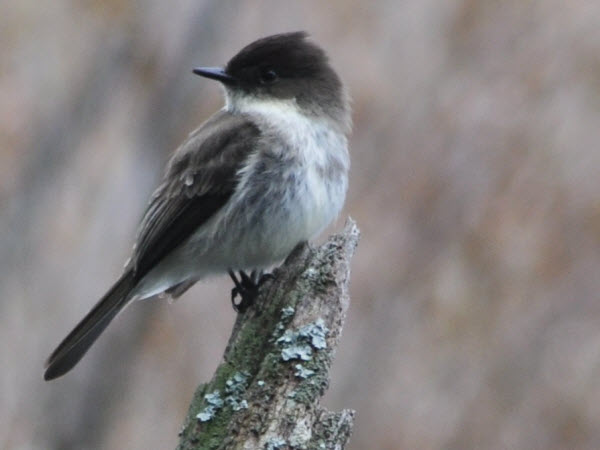
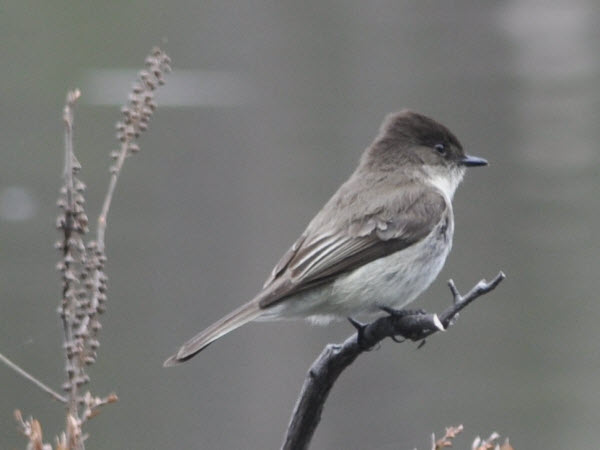
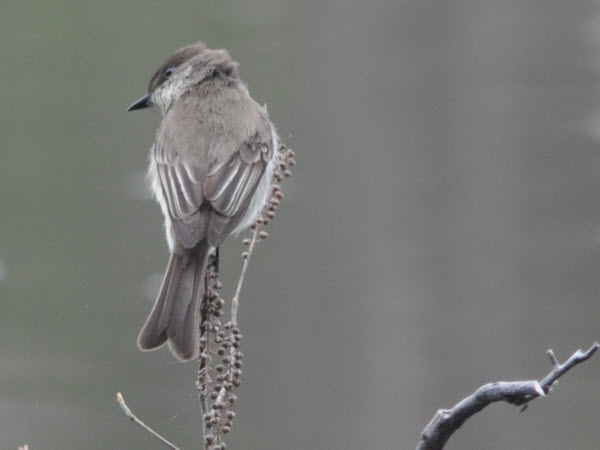
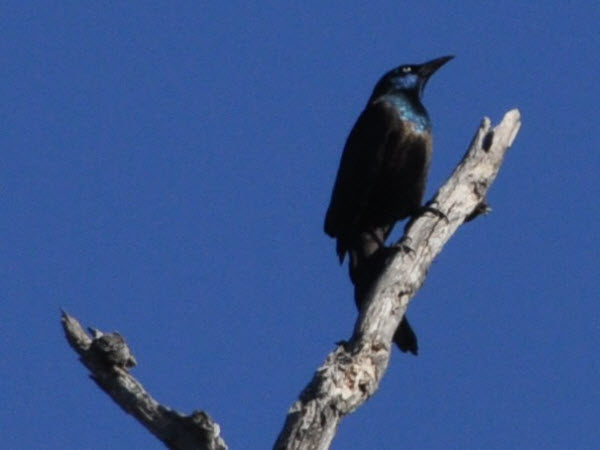
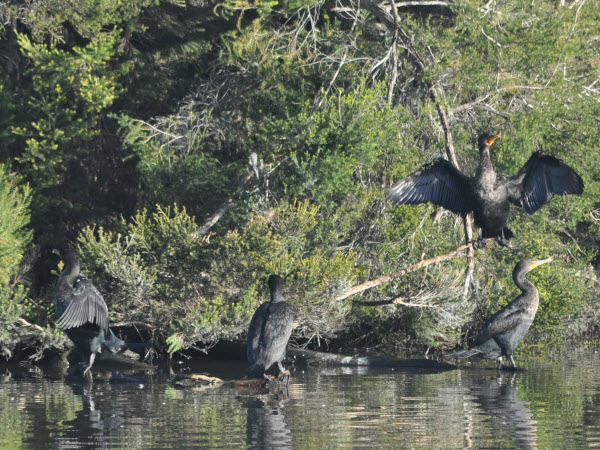
Monterey - there is a body of water that presumably was once an estuary, though there does not appear to be any connection with the ocean now, and so presumably the water is entirely fresh water. Many birds nest on a small island within that body of water, including this group of cormorants.
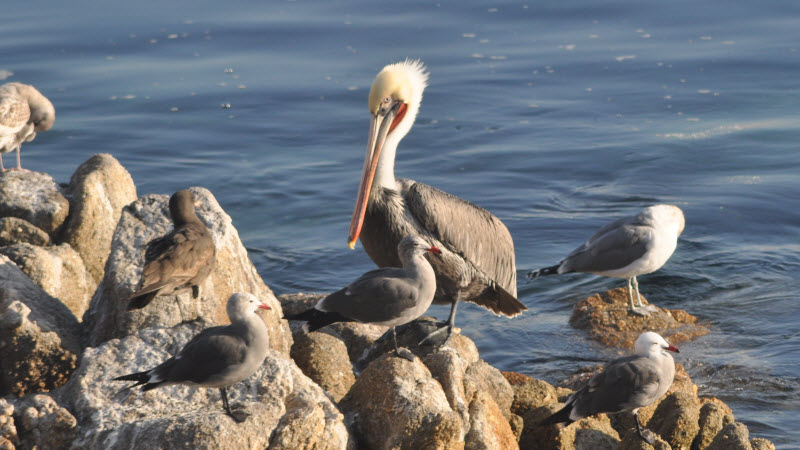
A picture of a Pelican in Monterey is sort of like a picture of a squirrel in the Northeast!
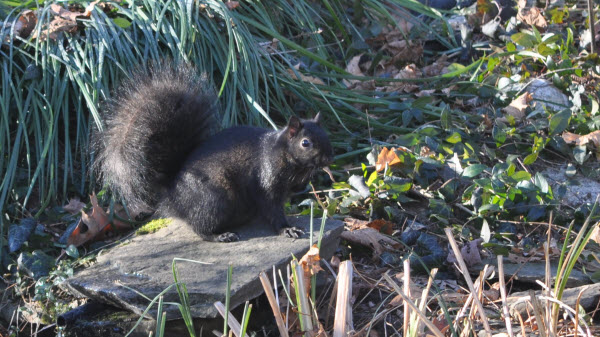
that squirrel in the NorthEast - at least it is not one of those standard grey squirrels!
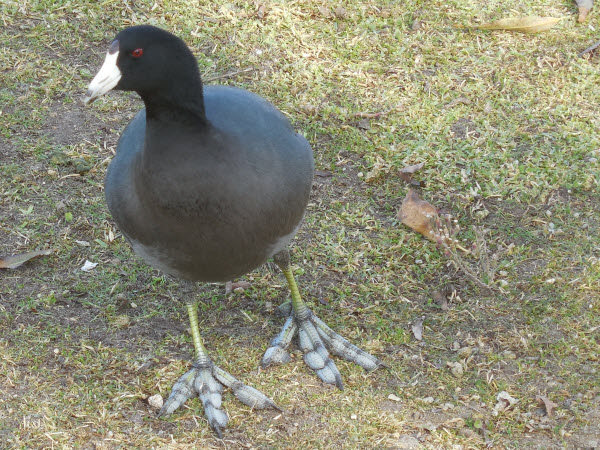
A Coot - what a humorous bird, I think - the feet, the yellow legs, the bird as a whole.